Friday, 3 November 2023

Mithila Culture roars in the SMP-10 Batch of IIMA

Red bricks campus portrayed in Mithila Art


Indian Institute of Management, Ahmedabad is a foundation of future business thinktank of India. The students flock in here not only to shape their career but also to prune up the same. A Senior Management Program is one for the latter. The basic criterion of 10 years work-ex itself ensures that the head of each of the incumbent students is already brimming up with business ideas and tongues emitting nothing but industry jargons. And if someone finds that they are also the connoisseurs  of  a regional art and culture then it is a pure bliss.

Mr. Vijay Kumar, a Senior Software Consultant at Cognizant based in Bangalore is a perfect blend of soil and silicon chips. When in office he is reverberated with programming codes and once out of the wall he is fully immersed in culture of his soil.

He did not utilise the scheduled sessions at campus merely for learning sophisticated techniques but also to showcase the culture of his ancestral land i.e. Mithila. His pitch for the culture may look extreme sometimes and many a times faculties and staff had to intervene for check and balances. For one instance Mr. Vijay felt pride in adorning a kurta with the mesmerising motifs of Madhubani aka Mithila art. On other he was seen distributing 'paag' the typical Mithila headgear to each of the participants coming his way. He did not stop here but also took out a large number of stoles with sterling Mithila art inscribed on them which he happily handed over to the large number of his batchmates.

The stoles are not only a fashion statement but also a cultural signature in the Mithila region. The stoles often feature traditional themes such as nature, mythology, and religious symbolism.  Stole is like a decorative scarf or shawl that is often adorned with intricate designs and motifs inspired by the traditional art form. Silk, cotton, and chiffon are the typical fabric used in  a stole. These are also known for their vibrant colors and elaborate patterns.   They are adorned with detailed hand-painted or block-printed designs that showcase the skill and expertise of Madhubani artists.  Madhubani art stoles have commonly found motifs as flowers,  animals, birds, geometric patterns. traditional symbols specific to the art form.   The festivals, weddings or formal events are the occasions in Mithila when you behold the traditional elegance to such outfit. 

In a post-convocation private gathering of the batchmates Mr. Vijay Kumar also distributed a large number of Mithila (Madhubani) paintings. Many of the paintings were prepared by SmreetiShree, an extraordinarily talented Madhubani painting artist based in Navi Mumbai and running Shree Creations. Palak Rani Dutta from Bangalore and Babli Meera Dutta from Jamshedpur were among others whose paintings were utilised in the event. And surely, who can be more proud than those who have a Mithila art as a gift or momento in their hand! The air was full of joy and fulfillment while they departed to their separate home destinations.

A few lines from the Hindi poem of Mr. Vijay Kumar- 
"Man me chhoti si duniya sab ki
Man se kabhi chhoti na rah saki
Soch tu chauhaddi se dur ek ghar ki
Rach sako mukkamal gar ek paridhi".

.....
Article by - Hemant Das 'Him'
Inputs from- Vijay Kumar (vijaykumar.scorpio@gmail.com)
Send your feedback to- hemantdas2001@gmail.com/ editorbejodindia@gmail.com





Thursday, 12 October 2023

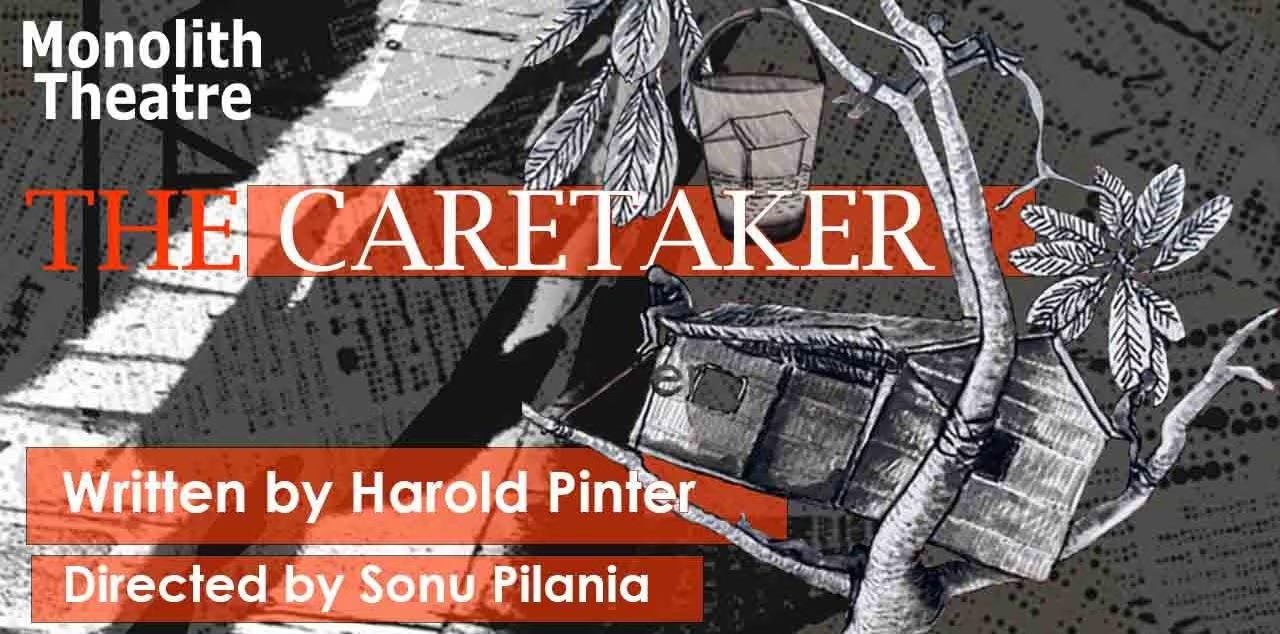
"The Caretaker" - English play staged in Versova (Mumbai) on 7.10.2023

 A maze of blind alleys

( हिंदी में समीक्षा के लिए -   यहाँ क्लिक करके क्रम सं. 36  देखिए )


Whatever you wish is certainly not going to happen. The maze of tantalization will lure you all the way but nothing will come in your hand. 'Uncomfort' is the biggest norm in today's human society.. To brag about is the only implement available to you for solving all the trickiest problems in your life. These are some of the ideas in a nutshell that emerge from the play "The Caretaker" written by Harold Pinter, the Nobel Prize winner in literature for 2005.

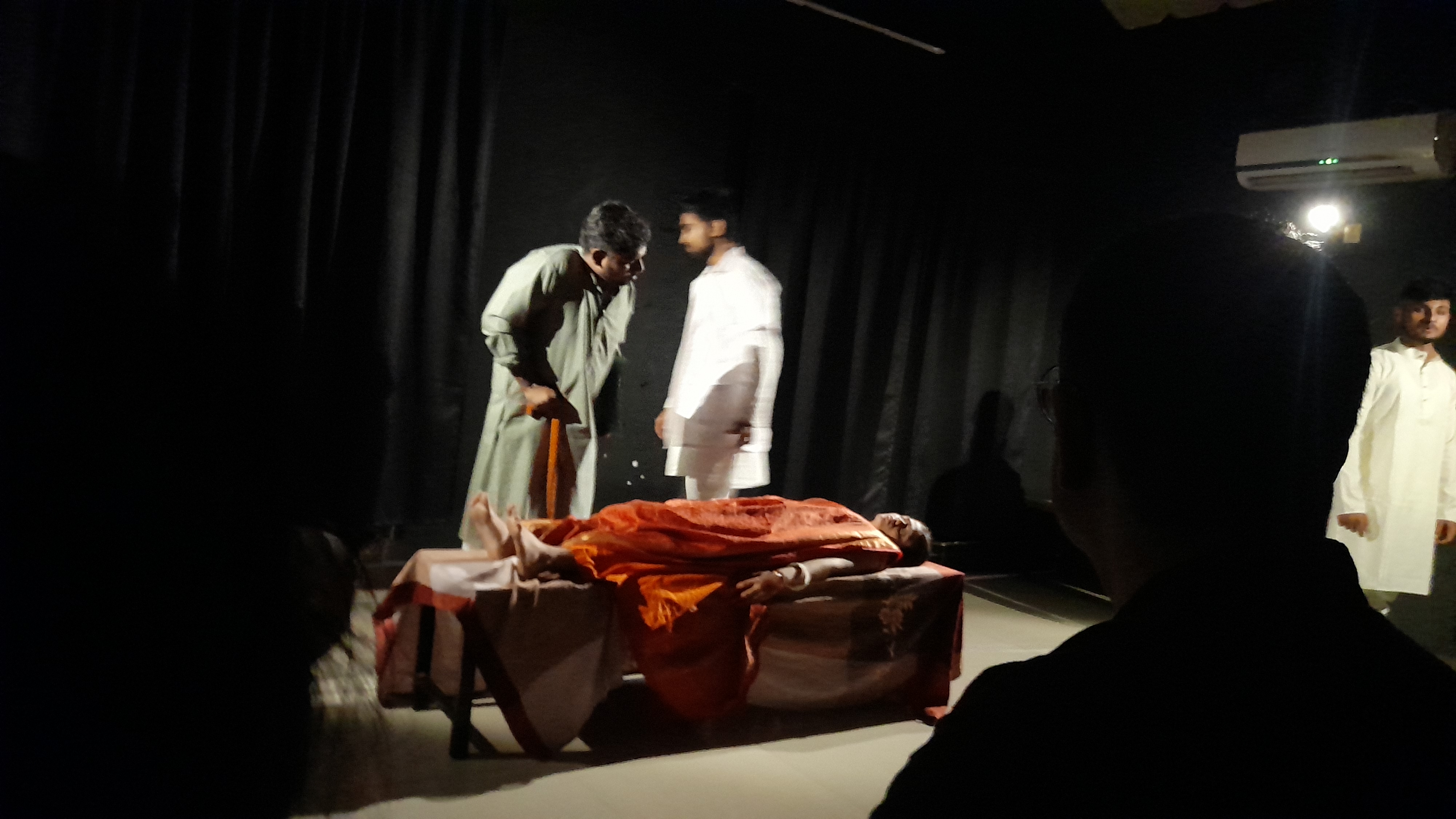
A homeless bearded old man Davies is given shelter in the house by Aston, a man who is suffering from the aftereffects of severe electrical shock therapy he has undergone in his past life. The damage of some part of  brain has converted him farcically into a more compassionate man. The moment Davies puts his steps in, he begins to criticise vehemently the unkemptness of the house and several other matters. Moreover, he keeps bragging about himself. He complains about his bed, about the seeping roof and about the wrapper he would put on his body. Aston tries to solve all of his problems and even pleads his brother Mick who is the actual owner of the house for making that homeless a 'Caretaker' of the house. Mick has already knocked down Davies badly on the presumption of he being  an intruder. But Davies being an ever-changing man succeeds in satiating the ego of Mick to the level that he agrees to make Davies the caretaker of his house. Now Davies think himself a king and takes no time in challenging his original rescuer Aston that he cannot throw him out of the house since he is now an appointed 'Caretaker' of the house by the actual owner Mick. Moving ahead, Davies has the impudity of mocking at Aston forgetting all the vital help he received earlier. While talking to Mick in friendly terms he whispers against Aston many a times. This is too much for Mick and after a fresh round of thrashing he throws Davies out of his house. Now when Davies begs for help to Aston there is no response comes from his mouth while he continually stares out of the window.

Before we discuss about the play we should be ready beforehand that we are entering a terrain which is perfectly dark, doomed and disconcerting. Actually a human society is not as bad as shown in absurdist plays but will certainly become so if they doesn't mend ways. In the present play, the viewers see that the person whose brain is damaged is rather a more compassionate and considerate one than the others who are in possession of fully capable brains. The implicit satire is suggests that in nowadays society, people use their brain only for ill motives. The person who has no shelter is not happy when he is provided with by a kind person and is rather somewhat angry over him just because he is more docile and mentally weak. This uncovers a very dark aspect of societal dynamics that those who are sufferer will suffer even at the hands of those whom they extend help to even on their own initiative. This is definitely frustrating. 

The set-design was impressive and gave a perfect impression of neglected household. This house was a threat to the hostel of bachelor students in terms of untidiness and rather it was hundred times higher in degree. Every belongings of the house were dispersed in a haphazard manner and the ambiance was like a jungle. A jungle surrounded by roof and walls. There were big buckets left hither and thither on the room floor to take care of the seeping roof. A massive pile of garbage was put right on the top of a cupboard as if it were a medal to be showcased. The clothing without fold were dropped in a random manner. Aston was mostly seen busy trying to repair plugs picking up from the electrical garbage dumped heavily in a prime spot of the bedroom  

An incompleteness cries all through the play in a silent and yet deafening sound. Aston is incomplete because of his mental damage which he tries to fulfill with a companionship but fails. Davies has no identity in this society. Even he has no document proof to show who he is. So he tries to fabricate stories and boasts of himself. He moulds his identity as per the incumbent circumstance as if he is that kind of person only what is needed at that moment. His consistent mention of the downtown Sidcup where he has supposedly kept all his important documents of his identity is nothing but a lie. Because he makes a series of excuses to avoid going there. First, he says he has no shoes to go there, and when a pair of shoes is provided, he finds that it is an unfit pair in his feet. When he is given another pair of shoes by Aston he complains about the different colour of the laces because of which he can't go wearing them. Mick seems to be an energetic person always ready to assault others but himself is nothing but a dreamer. He has big ambitions but never put steps to fulfill them. Still, he is overpowering over the rest two because of his comparatively sound mental and economic condition. So, he is both the owner of the house and mentally normal. This makes him violent and he never miss a chance to thrash Davies for no reasons. He has no much attachment with his brother too but somehow maintain terms with him.

There is a bag throw sequence. A bag perhaps having inside the things of utility for Davies is brought by Aston and shown to Davies. The real needy person is Davies but the bag keeps rolling over from Aston to Mick and never comes to Davies. Though the bag is offered to Davies many a times but whenever he reaches to get it, it is thrown to other person. This is nothing but a reflection of mirage a deprived person is most likely to pass through all through his life.

In this play by Harold Pinter, there is neither story, nor music, nor mystery, nor thrill, nor ideal, nor bizarreness, nor entertainment, yes there is a little humor, that too based on saddness.  But for such plays only, he received the Nobel Prize for Literature in 2005 because his plays are closest to the truths of life.

Design & Direction was by Sonu Pilania who succeeded in maintaining the sombre outline of the theme with full vigour.. Saajan Kataria, Sandip Mishra, Sanjay Joshi and Sonu Pilania were the actors who left the people laughing or stunned time to time. Light design came from Subhratanu Mandal and his work was really vital that lived up to the expectations. 

This kind of play gives a unique experience and I would  say that the absurdist play will never let you feel that it is a play rather you feel that you are peeping out of your window and seeing what is really happening around your house.

.....
Review by - Hemant Das 'Him'
Send your feedback to - hemantdas2001@gmaail.com / editorbejodindiaa@gmail.com 
Link of other drama- reviews:  Click here


Wednesday, 4 October 2023

"Tagore-nama" - Hindi play performed in Versova (Mumbai) on 30.09.2023

To hell with male!

( हिंदी में समीक्षा के लिए -   यहाँ क्लिक करके क्रम सं. 35  देखिए )


The acuteness of guilt feeling is so high that both the real male culprits testify their guilt. But Oh the Male chauvinism! You are still not able to save an innocent homemaker from gallows! Either he is a husband or a magistrate he will put all the blames on some 'she' only with total disregard to all the facts emerging in the open sky. The state of patriarchy was at peak in Bengal in the British era. But has it changed completely? Yes it has changed in favour of woman race but complete change is still a far cry only.

'Tagore-nama-  a motley of small plays were performed at Asmita Theatre Studio in Versova (Mumbai) on 30.9.2023 on the auspicious occasion of 30th anniversary of Asmita Theatre Group. 

A number of Ravindra Nath Tagore's pithy stories were presented in a succession in the form of small dramatic plays. Let me first give a synopsis of the brief content of the plays.

The murder of his sister-in-law has been committed by someone else but the husband requests his wife to take the blame of it so that the actual culprit (his elder brother) is saved from being hanged. He says to the villagers that another wife can be brought but not brother. Hearing this, the wife is numbed. She astonishes as whether she had left her dolls in her father's home and came to her in-laws only to see such a doomed day? But if the husband and all persons in the village are in unison on such a barbarous plan then what's the point to live more! She agrees. (Read the first para again here.) In the end, when she is about to being hanged the officer-in-charge asks her last wish. She says she wanted to meet her mother. When the officer conveys her that her husband wants to meet her. She says,"..To hell with him".

In another story, a girl is married and brought to her in-law's home. But the mother-in-law is not happy for she could not bring a big dowry. The mother-in-law mistreats her openly saying that she would have treated well if she would have brought more dowry. This news reaches the father of the bride. He decides to sell off his house and fulfil the demand. But when he goes to and conveys this idea to his married daughter, she vehemently opposes it. Also, his sons also reach there and oppose on the ground that he takes care of daughter only and not the sons. With a heavy heart he comes back to his home. After some days the newly-wed girl fell ill and wanted to go to her father's home. But the father was refused by the in-laws to take the bride to his home until the balance dowry is paid. She dies for want of treatment at her in-law's home. The same in-laws who never took care of the bride while she was alive performes the last rituals with a great pomp and show. Then immediately another bride was brought in the house whose father gave full dowry.

There was a pathetic story of a servant. He used to take the master's toddler son for a stroll. Once they were walking around, the little boy asked for some flowers visible from the bushes at a river bank. When he went to bring the flower the toddler went into the river out of curiosity and was drowned. The servant was punished for this and was thrown out of his master's home. When he returned to his village, after some time his wife became pregnant. While giving birth to a male child, she died. This boy was reared by his father (Servant) with a great love and care. But when he grew up he developed the traits of a rich person. The servant thought out a plan for repentance. He took his son to his master and told him a lie that this very boy is his (master's) actual son. His issueless master believes on it and takes custody of the child but orders the servant to go away because he concealed the truth from him. The servant pleads to let him stay there. On this the child (Servant's son) suggests his new-found rich father to commit for some pension to the man. The servant went back. When the money-order of pension was sent, it was returned because there was no recipient living there.

The story of a blind old beggar lady was equally moving. She has an adopted son whom she takes care of very eagerly. She had made some wealth out of begging and gives it to the safe custody of a money-lender so that it could be utilised in future for her son. Once her son falls sick. The old lady beggar goes to the moneylender and asks for her money. The money-lender says there is no money of her with him. With great despondency, she comes back. After some days, the condition of her son worsens. She takes her son to the moneylender and beseeches to him for money so that she could consult the doctor and her son's life is saved. But the moneylender denies it cruelly and says to her to go away with her sick son. But the moment the moneylender casts a look on the boy's face he identifies him as his lost real child. After this he requests the old lady to give custody of the boy. The old lady hands over the boy to him saying that now you would take care of him because he is your son, but till it was mine you were wishing him to die. The woman returns alone. But the boy does not recovers and his condition worsens further. The doctor says that the boy is missing his mother and if she comes then he may recover. The moneylender goes to the old lady and begs him to accompany him so that the child is saved. She revenges on him saying she would not care if his son dies. But ultimately she agrees to look after the boy who was earlier her own. The boy recovers under the care of his motherly old lady. After the child is cured the old woman is about to return. Then, the moneylender offers her the money bag she had given to him. But the old woman refuses to accept it saying it was kept only for the purpose of her son who is now with you. 

A story depicted the farce of feelings  in art at the cost of humanity. There is a painter who is mocked at by his colleague  for lack of professionalism in his work. Their comments pinched him badly. Once his son fell ill. His condition became serious. Even though the restless wife kept crying and requesting him to call a doctor, the painter remained busy in completing his artwork  for the forthcoming exhibition. The doctor could not be called and the son died. On this, his wife retired on the bed life a lifeless person  taking the head of his beloved son in her arms. A great passion flashed into the painter's heart and he started a new painting of a mother taken the dead son in her lap. The painting was so realistic that it was the most acclaimed painting in the exhibition and even the taunting colleagues exclaimed their feelings that they would have loved to make him his teacher.

These were some of the stories presented. The artists were the students of this acting school namely Pradeep K Sharma, Prachi A Mishra, Soni Sharma, Manas Keswani, Siddhant Mishra, Navyug Gupta and others. The play was directed by the renowne3d director Arvind Gaur and Sangeeta Gaur had given the music.

This was not only the promptness but also the expressions and sound-modulation of the large number of participating actors that made the show remarkable. The credit chiefly goes to the director. 

........
Review by- Hemant Das 'Him'
Send feedback to- hemantdas2001@gmail.com / editorbejodindia@gmail.com
Link of other drama- reviews:  Click here


Wednesday, 27 September 2023

"Aankh Micholi"- Hindi play staged in Bandra (Mumbai) on 24.09.2023

 'Crush' surviving the marriage

( हिंदी में समीक्षा के लिए -   यहाँ क्लिक करके क्रम सं. 34  देखिए )


You often have a crush on someone who is beyond your reach. The moment you reach that person you discover it all was worthless. It's always brilliant to advocate liberalism with other's spouse but only till the point when your spouse begins dithering away from you for somebody else. 

Even a hardcore gentle person can turn a flirt wizard after watching this play.

It was exciting to behold the high-class natural comedy. I, you and all always keep two faces. One for self and the other for others. The more this is exposed, the more is humour. So, you find there is absolutely no need of absurd costumes, gaudy postures or vulgar themes for the best comedy. The best comedy is that which is meaningful and relates straight to viewer. 

Extra-marital sexual attraction is a phenomenon nobody is free from. And this play focuses on and deals it to the culmination. The drama script of C.P. Deshpandey as it was served by the director Vikas Bahari made it eminently clear that sexuality does not require vulgarity. 

An old flame of college days Ajay meets Naina at her home who is newly married to a CID offer. Naina is a sensible woman and does not fall prey to Ajay so easily but she could not resist the showering of plaudits from him. And gradually she is somehow in a mood of liking him. After all, he has been his ex-male friend (if not boyfriend). Ajay speaks highly of everything directly or remotely connected with Naina -  motif on her 'saree', colour of the walls, the sofa, the artworks, the brands she uses and everything you can imagine. He keeps praising everything about Naina along with simultaneously disapproving of everything about his wife Sandhya. For securing intimacy with Naina he blames that his wife is entangled with his collegue Vikas. Naina is a playful woman who relishes flirt but what Ajay is not knowing is that she is also wide awake about the limit. The moment Ajay begins to delineate the astrological grandeur of a mole on her face and then pleads her to show other moles on different corners of her body, Naina is alerted. Ajay is a master of seduction so instantly he changes his demand and pleads her to dance with him as they used to while in college. A full dance bite is here to enthrall the audience.

After the song played by the speaker is finished Naina goes to the kitchen for preparing coffee but Ajay was still jumping and murmuring the song when the CID officer caught him red-handed. A very witty conversation follows here between the legal and illegal claimant on the beauty of Naina. Two chirpy Hindi dialogues are given below-

"Jab do chor, alag-alag chor raston se chal kar ek hi jagah pahuchte hain to wah chor raasta nahi rah jata, highway ban jaaata hai"

"Jo log kam satark rahte hain unki grihasthi sukhad rahti hai aur mai apni grihasthi sukhad rakhna .... nahi chaahta.."

The CID officer schooled him to the brim but Ajay pleaded not guilty. So the CID officer thought an other plan.

In the next scene, when a natural brat was on of Ajay with his wife Sandhya just for nothing, the doorbell rings. Then there is Naina with her husband to be hosted by Ajay and Sandhya. Naina's husband plays every trick with Sandhya that was played with Naina at her home by Ajay. But Ajay pretends to be a 'liberado' and rather tries to enjoy his time with Naina once again. But.. but there is a trigger point at which Ajay is flabbergasted and thinks it is better to take hold of his wife rather than claiming someone else's. What is that trigger point? Go and watch the drama.

This sort of show is really a boon to the viewers. There was an extreme comedy but in perfectly natural circumstances. Every character is framed in a genuine and normal form the way we find them at our next door. The duplicity of someone's thoughts is the biggest source of humour and the playwright C.P. Deshpandey has tapped it utterly. The director Vikas Bahari has ensured that not even a single drop of it is missed. My heartful applauses to both of them.

The actor who played Ajay was just too hilarious! His mannerism can be paralleled with iconic Dev Anand with a high modicum of hilarity. In the scene of his home when Naina visits with her husband the ideological duplicity of his liberalism is brutally exposed. This nakedness of moral adventurism left everyone rolling around laughing. The laughter kept oozing out on every witty dialogue of Ajay and the CID officer. The two young and beautiful women maintained their sobriety while also kept adding to the humour from their end. So, there was a contrast of two restless men very keen to break the civil norms with the two women who were participating in the crossover after some feminine resistance. And by God's grace it all culminated on a civilized note.

Needless to mention that the CID officer and the two lady actors did brilliant jobs. The way the CID officer encircles Ajay without any concrete proof was incredible and became possible only through the perfect accent and pauses in his dialogue-delivery. He has a imposing personality which justifies his role. The gorgeous look and smile on Naina's face were very attractive and suited her role while the perplexity of Sandhya for her fondness to her colleague Vikas (who never came on-stage) was obvious. She impersonated perfectly the Indian woman who knows it well  how to bring a spoiled husband well on track. A natural beauty of her Indianness is praiseworthy.

The actors were Paritosh Tripathi, Jatin Sarna, Reena Agarwal and Priya Raina.

The excellent show must give credits to those who handled lights, sound and costumes which were faultless in the show. The set-designs of a middle-class household was also realistic.

The play was staged at St. Andrews Auditorium, Bandra (Mumbai) on 24.9.2023.

......
Review by- Hemant Das 'Him'
Send your feedback to- hemantdas2001@gmail.com / editorbejodindia@ghmail.com
Link of other drama- reviews:  Click here


Tuesday, 19 September 2023

"You must die"- Marathi play staged in Thane (Maharashtra) on 16.9.2023

Anyone could have but who did it?

( हिंदी में समीक्षा के लिए -   यहाँ क्लिक करके क्रम सं. 33  देखिए )


There is enough 'masala' that will keep you on the edge of your seat. Each character is possessing some distinctive characteristics of a murderer. Even though the matters go unfolding with passage of each scene you remain absolutely clueless till the very end of the play. Even though there is a perfect set-up seen walking behind the murder you can't quite put your finger on someone. 

Each character is a fit person to be suspected. There is a fresh murder and so many are in the family who you may doubt. As the shot down wheel-chaired man was paraplegic and ill-mannered, why not his attractive young wife might have conspired? Why not the cunning looking caregiver could have taken the life of his master if he could not succeed in blackmailing the family? Why not the widow step-mother might have committed the crime for huge insurance money? There is enough chance that the mentally retarded gun-loving younger brother would have done this actual murder as part of his game. His caregiver Julie is also potential of cherishing ulterior motives. The stranger who intruded with an SOS request and took charge of the situation as a savior of the survivors looks like an easy target to be suspected. And in the climax, one more murder is committed to the person who is the main culprit of the earlier murder.

So, who fired upon Anurag, the first victim? Go and watch in the theatre.

The police inspector and his assistant did marvelous job. The interaction between the dominant and subordinate officials was wonderful. Whereas the Inspector was seen always looking to some material to find a clue his assistant was always up to delineating every bit of findings into his register. 

The caregiver of the murdered man looked cunning with the countenance and body-language at every other second. The responses of the step-mother through her dialogues were colliding with her facial expressions putting her more in the mess of suspicion. The wife of the murdered man looked impudent enough masquerading with her licentious lover. The surprising fact was that she herself was clueless who murdered her husband. She was taking the blame perhaps just to save her lover. And in seclusion, when the wife's lover also expressed the ignorance about the culprit, the viewers were left completely nonplussed. The stranger and the lover did justice with the characters.

The retarded brother acted well when he was seen hopping around with his toy gun. But in the later part, his gun was not toy and a real one giving goosebumps to everyone. Julie in her sensible caregiver role acted well especially in the scene when her protegee is flirting with the real gun and she was trying to control her with her cajoling tact. 

The artists who embodied the different characters were Saurabh Gokhale, Sharvari Lohkare, Sandesh Jadhav, Vineeta Date, Neha Kulkarni, Ajinkya Bhosale, Pramod Kadam, Dhanesh Potdar, Harshal Mhamunkar. 

The play is written by Neeraj Shirwaikar and the director was Vijay Kenkade. Ashok Patki was the musician and lighting design was by Sheetal Talpade. Costumes were by Mangal Kenkare and Stage design was by Rajesh Parab. 

The playwright has set his script in a typical movie style but has carried up the plot justifiably till the very end. Vijay Kenkare is a virtuoso of suspense thriller and has again done it with consummate aplomb.

The duo of the Director and Playwright of this play has proved their amazing capability of keeping the viewers all agog from the first to the last scene notwithstanding the plot might be moving on a hackneyed track. I was satisfied with the thrills I got.

.....
Review by- hemant Das 'Him'
Send your feedback to- hemantdas2001@gmail.com / editorbejodindia@gmail.com
Link of other drama- reviews:  Click here


Thursday, 14 September 2023

"Okk hay ekdam"- Marathi play staged in Vashi (Navi Mumbai) on 10.9.2023

 A musical grouse in Corona backdrop

( हिंदी में समीक्षा के लिए -   यहाँ क्लिक करके क्रम सं. 32  देखिए )


It was surely a hefty bunch of sweet melody and fantabulous dance bites well threaded to a Corona tale. 

Frankly telling, because of its pristine folk form of style and language, I could never get a hold of it and the play remained all Greek to me till the last point. AIl of my attempts of getting core of it fell flat. But I enjoyed the show as any other person will.

The issues raised were in the backdrop of  incessant spells of lockdowns in the Corona period. It took a heavy toll of life and amenities of daily wage earners including the 89 members of a 'tamasha' (a folk drama) group.  Through this play, they tried to show the true picture of adversity faced by the artists and how their attempt of getting help from the authority failed. 'Online' was the rage of the era. Every activity like marketing, dining, play, gossips, education and love, all had incarnated themselves in their 'online' avatara, why not 'tamasha' should also follow suit.

So a videographer was hired and a thrilling performance of 'tamasha' incorporating all essentials like music, song, acting dance and action was recorded for broadcast. The authority listened to their grievances and perhaps tried a help but there were many limitations. Many people died of Corona and some of them were perhaps related to this 'tamasha' group also.

The whole composition was a treat of dance, music and singing with a delicious splash of super-charged acting. The choreography was riveting and the whole atmosphere was charged up with excitement after the chorographical presentations . The front of the stage was resplendent with two towering pictures of  revered goddesses Laxmi and Saraswati.

In the whole play the word 'Vishwaguru' was uttered frequently. Though I could not transpire the actual context but I think it might have been used satirically. Also, on many occasions I found especially in the second half of the play, the actors were frequently sneezing as a part of acting perhaps to recreate the Corona ambience.

The play was jointly written by  Sudhakar Pote and Ganesh Pandit. The concept and research was by Savitri Meghatul and the director was Ganesh Pandit. The artists who acted in it were Savitri Medhatul, Vaibhav Satpute, Sudhakar Pote, Seema Pote, Panchu Gaikwad, Vinod Awasarikar, Vikram Sonavne, Abhijit Jadav, Pradnya Pote, Bhalchnadra Pote and Chandrakant Barsinghe.

All viewers can relish in song, dance and action of this play though for those who are well-versed in Marathi can enjoy it to the most.

.......
Review by- Hemant Das 'Him'
Send your feedback to- hemnatdas2001@gmail.com / editorbejodindia@gmail.com
Link of other drama- reviews:  Click here


Thursday, 7 September 2023

"Laadki" - Gujarati play staged in Chawpatty (Mumbai) on 3.9.2023

 A daughter in father's lap

( हिंदी में समीक्षा के लिए -   यहाँ क्लिक करके क्रम सं. 31  देखिए )


The surgeon knows well that the probability is much less than perhaps 0.01% but a father is confident that his daughter will emerge from the surgery alive and completely healthy. A surgeon is a surgeon and a father is a father but alas! Both are the same person in this case. 

Never get confused with what is conspicuous in the script. Try also to read what is not written. See also what is not shown. And I tell you what is that. God is just another name of love. He has different forms for different persons. And for a loving doctor-father his patient-daughter is God. Saving her life is the biggest worship he can do. It is his staunch belief that his God can never die notwithstanding what the statistical probability is. He rejects to participate in religious rituals because he believes that there is no such hopeless case in his daughter's treatment that one should pray Almighty. He is the best surgeon in the world with 100% success track record and so his surgical treatment must work in the case of his daughter too.

A world-renowned surgeon has a very playful daughter whom he loves too much. He has amassed a good wealth which he wants to spend in his daughter's marriage. This news comes to a mafia and the extortion game turns bloody in which the daughter suffers bullets hits from her back. The bullet is at a very sensitive point on the spinal cord and as the medical team believes even if it is removed she would not survive the complications out of it. The daughter knows the futility of her treatment and pressurises her father to discharge from the hospital. The father knows that a patient who is already on various kinds of medical support in the hospital would not survive long after the discharge. So he denies to discharge even to the utmost chagrin to the daughter. On this the daughter files a case through her boyfriend and the court sentences in her favour.

Just the  moment the daughter comes in the house her father begins to beg to her to accept the forthcoming surgery so that the attempt to save her life should be made in full sense. But the daughter knows it is futile and she is going to die soon anyway either after or without surgery. So she decides not to undergo surgery. But the father is adamant. Seeing the father's sentiments, the daughter agrees for the surgery but before that she requests her boyfriend to marry her so that her father's duty is fulfilled on this vital social obligation. The wheel-chaired daughter wears red 'chunari' for marriage and the boyfriend puts vermillion on her forehead. She asks where is her darling father who wants her go get the surgery. Her mom and other say that he is the operation theatre and is waiting for her from there. On this, she allows her to be taken to the operation theatre. Just after her departure from the house, her father is seen sneaking out of his bedroom and wading through with heavy steps towards the operation theatre. Actually he wanted to ensure that the daughter has given the consent for the surgical operation. After all, it was going to be perhaps a journey to, God knows life or death. 

After the surgery, the scene becomes too poignant. Many inattentive viewers would again see what is shown. But the context is totally different. What is being shown is not intended to be taken on its optics value. The scene shown was that the surgeon-father is beseeching his wheel-chaired daughter to stand on her feet, come to his lap and let him fondle her as he used to do in her early childhood. It is also shown that there happens a trembling in her whole body and slowly she becomes normal and actually wobbles her way to the lap of her father. The moment she reaches there, her father dies. This scene is symbolic. Actually a discerning viewer might have seen that the father's love to his daughter remained alive and became healthier but his confidence that love can change impossible to possible dies.

Among the hundreds of plays watched by me in the last nine-ten years this was one which moved me from within and left absolutely helpless in keeping myself composed. The show was a live testimony of the fact that drama is the strongest medium of conveying a feeling. In the last scene, the way the protagonist called on his daughter to come to his lap was not an acting but like an exudence of a soulful poem into action. I bow to the excellence of this exceptionally talented actor! This pithy scene was elaborate and in fact,  incorporated all the essentials of the play. And it all was nothing but the sheer, unbound, selfless love of a father to his daughter.

This play shows a fight of a father to a surgeon, a fight of feelings to facts. A human life is not like a car which runs simply on petrol. A human life is wait, excitement, pain and danger of a journey.  This  goes much beyond the maps, itineraries and fuel. If you feel it you live otherwise you are just spending your days. 

A legal buff will find the script vulnerable on many counts of ethical and human right issues. After all, what a father-cum-doctor was doing? He was forcefully trying to keep the patient within the hospital against her will. And the pressure was so hard that the patient had to seek the judicial remedy. Even after she was lucky enough to get a judicial favour and so discharged from the hospital, the pressure was again mounted on her for undergoing a surgical operation which she absolutely hated.

But the stunning aspect of the wrangle was that the love between father and daughter was not diminishing and still got growing even in midst of their confrontational stances. The father and daughter both knew that she is going to die soon anyway without a regard to whether she is kept in the hospital or she undergoes the surgical treatment. The daughter wanted to enjoy the normal love and pleasures in her last days but the feelings of a father-surgeon was not giving way. His optimism was alive till his daughter was and so he was not ready to let any stone unturned in making his daughter cured. Even if the chances of success was too meagre he wanted to take because of his staunch optimism towards his daughter. 

Though the playwright has tried his best to come out scot-free on ethical ground and has perhaps succeeded in getting a narrow escape. This is because the doctor-father went to the operation theatre only after ensuring the consent of his daughter. But again, whether the question is not here as she might have given consent under emotional duress of her father? Whether she did not know that she was going to die instantly and whether that was not the reason she married her boyfriend before the surgery so that the father should be freed from the guilt-feeling that he could not marry off his daughter.

I find no words to express the excellence of the playwright's work. Such a masterpiece in a regional language is simply a boon for the whole humankind.  The name of playwright is Vilopan Desai and the director of the show was Dharmesh Vyas. The artists who acted were Pratap Sachdev, Gazal Rai, Hitesh Upadhyay, Sharad Sharma, Sanjivani Sathe and Rajkamal Deshpande.

Full credit goes to the playwright and the protagonist of the play. The direction was powerful which kept the viewers engaged throughout the play and let them feel it like the real life story in their neighborhood. The sombre outlook of the play was successfully tuned down to the normal, time to time with the natural comedy scenes of the nurse in the hospital and the uncle in the house. I have already mentioned about the acting of the protagonist in the sixth para above. Had the  daughter not matched her father in delivery of her acting skills it would not have been possible for the protagonist (doctor) to take the play to the new skies of emotions. Her acting was actually more challenging because she had to remain bed-ridden for most of the time. But the director made her bed half-risen from the back side which allowed the viewers to make an eye-contact with the vital character of the play. Other actors who acted as the patient's boyfriend, mother, uncle, aunt, don and goons also did their stints in a meaningful manner. 

This play will lie in the memory of the viewers like a cherished memory for lifetime. 
.......

Review by- Hemant Das 'Him'
Send your feedback to- hemantdas2001@gmail.com / editorbejodindia@gmail.com
Link of other drama- reviews:  Click here